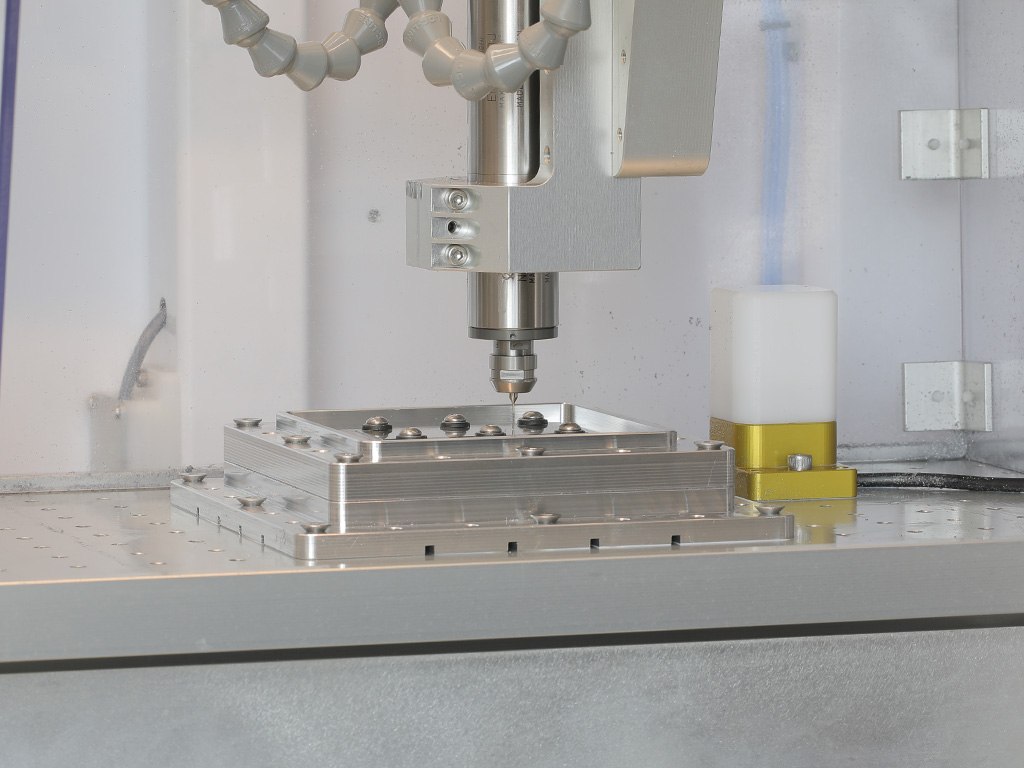
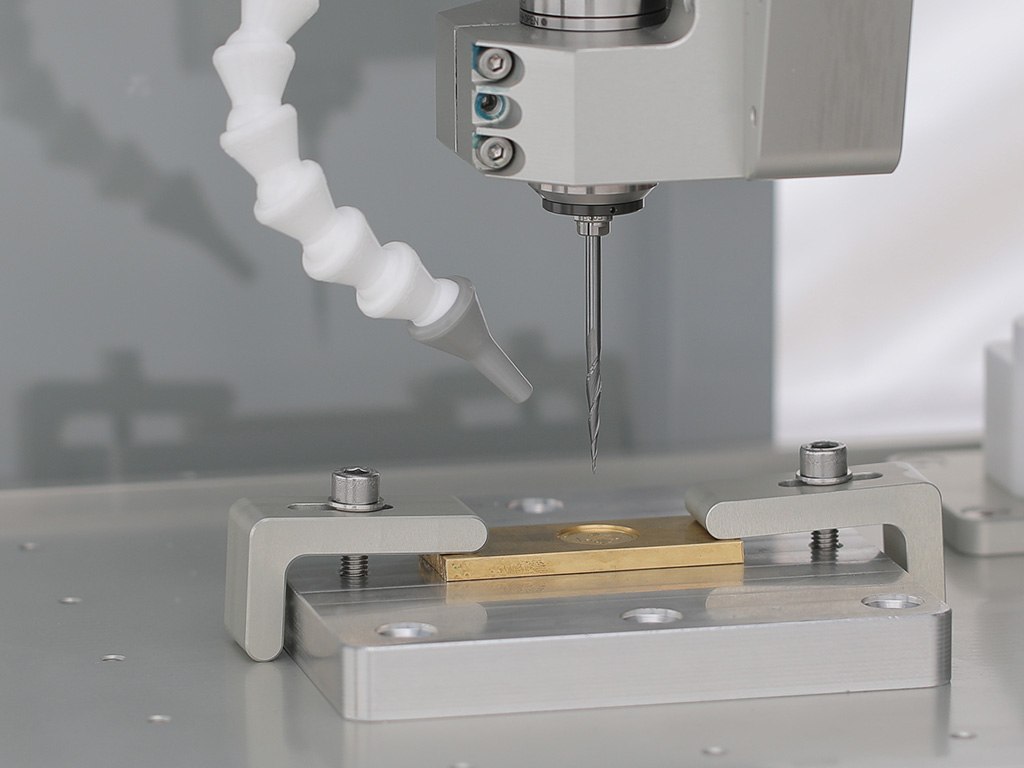
3D milling solutions for researchers, scientists, watchmakers and all those looking for high-precision milling and machining
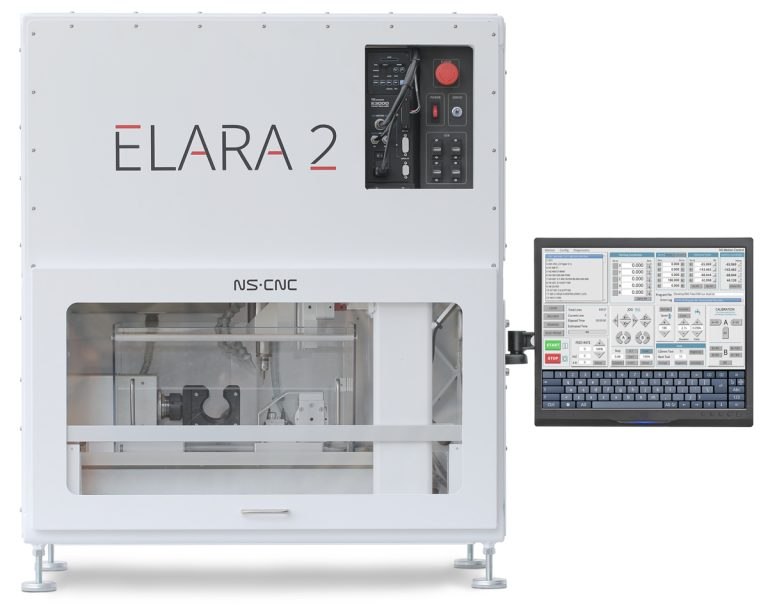
NS CNC Elara 2
Elara 2 is a high-precision desktop CNC milling machine manufactured by NS CNC, available in both 3-axis and 4-axis configurations. It is designed for users who demand exceptional machining accuracy, including scientific laboratories, universities, aerospace manufacturers, and companies in the jewelry and watchmaking industries.
The machine is capable of precision milling across a wide range of materials, from wax and plastics to hard metals and ceramics. Its versatile design supports multiple workpiece clamping solutions, tooling options, and CNC machining strategies, making it suitable for both research and industrial production environments.
Micromilling Capability
The machine is specifically designed for ultra-precision micromilling and microdrilling applications. The combination of high-precision mechanical components, a specialized carriage design, optimized lubrication and cooling systems, and the extensive experience of the machine designers enables the use of some of the world’s smallest milling cutters and drills – with diameters down to 5 microns.
This capability allows users to achieve exceptional machining accuracy and surface quality in applications where conventional CNC equipment cannot operate reliably at such scales. This technology is especially valuable for scientific laboratories and research facilities working in fields such as microfluidics, miniature device fabrication, precision instrumentation, and other advanced micro-scale applications.
Elara’s Configurations
The machine is available in four standard configurations, all built on the same rigid base, frame, and proven three-axis platform. Each configuration is designed to meet different machining requirements while maintaining the same level of precision, reliability, and performance. To expand functionality, customers can equip the machine with optional accessories such as an automatic tool changer or a rotating head, allowing greater flexibility for complex machining tasks and increased productivity. Examples of standard configurations are shown below. In addition to the standard versions, NS CNC can also develop custom machine configurations tailored to specific applications and customer requirements.
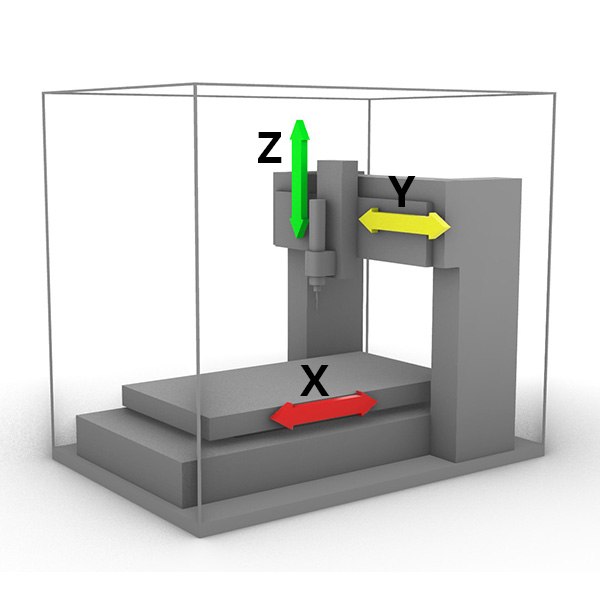
3 Axis
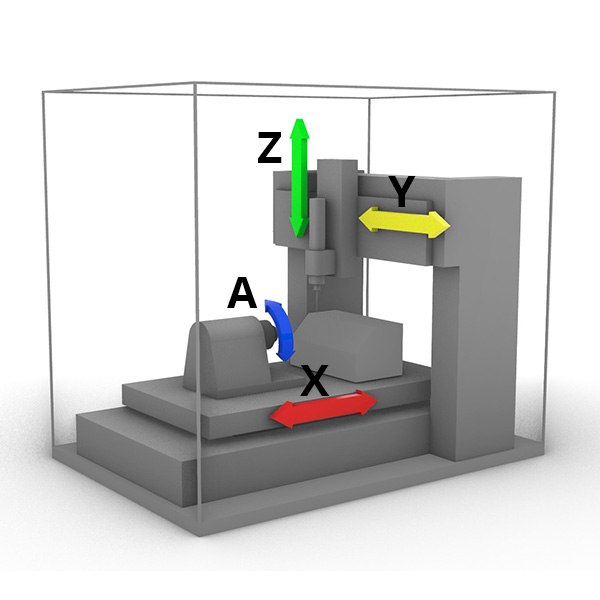
Traditional 3 axis CNC machine configuration. Simple and easy setup for milling flat parts. The spindle moves along 3 axis and the workpiece is mounted directly onto the X carriage. The direct clamping helps with stability and minimizes vibrations.
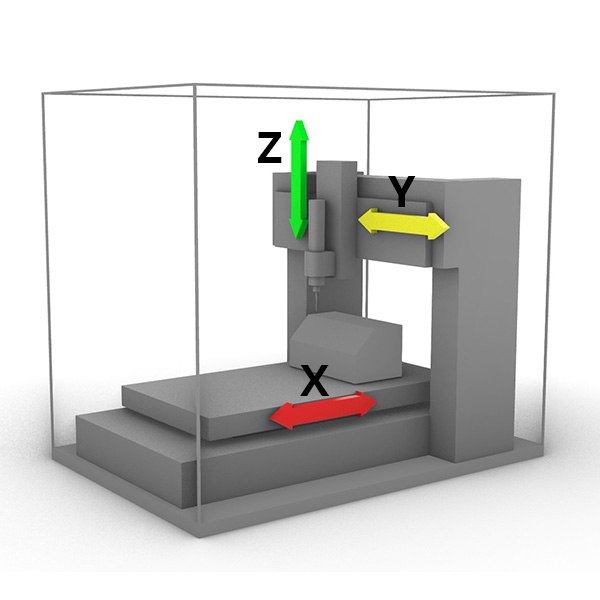
3 Axis with ATC
3-axis CNC milling machine with ATC and spindle that automatically changes the milling bit. This machine allows for fully automated milling bit change process during operation. ATC requires air supply.
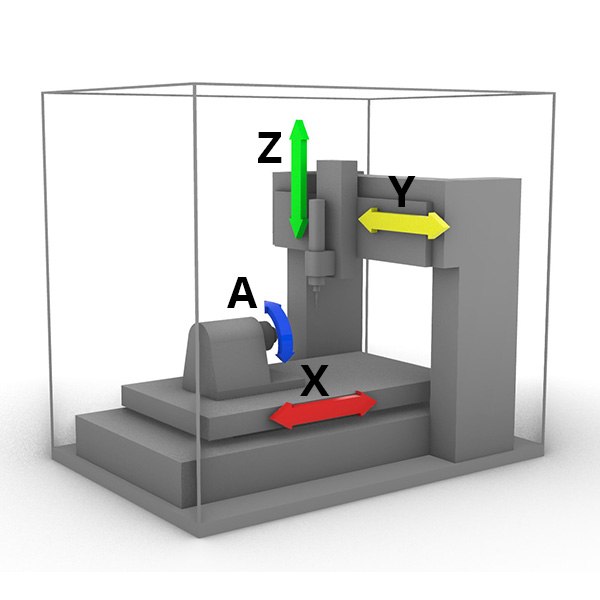
4 Axis
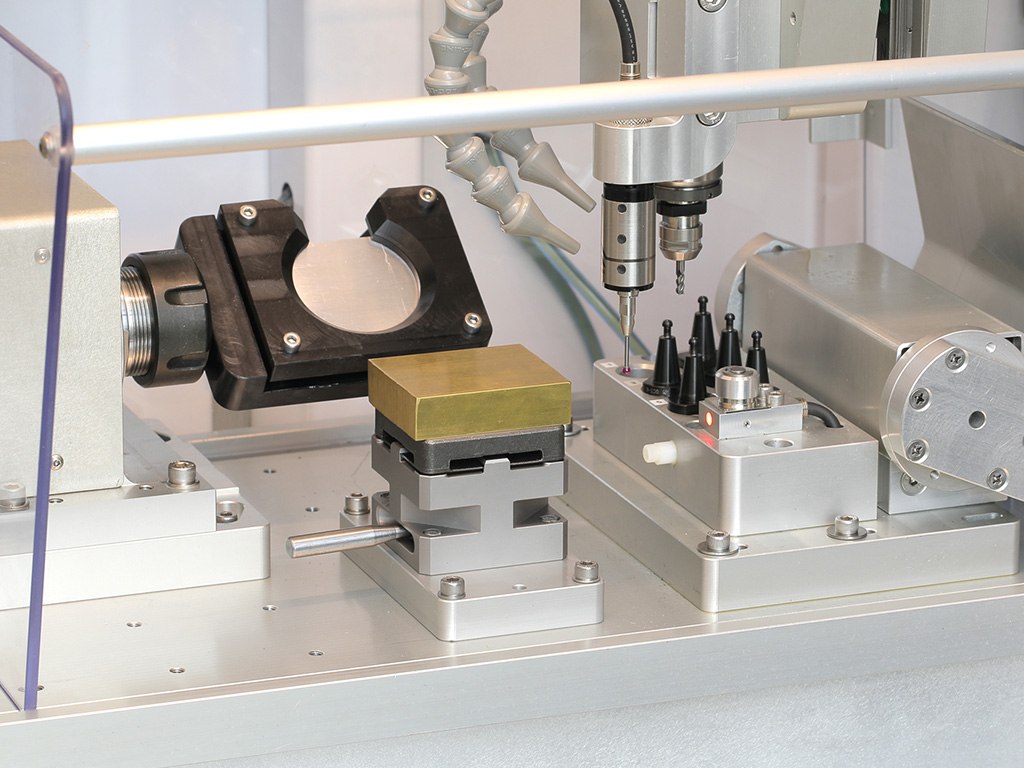
4-axis CNC machine in which the 4-axis A is a rotary head rotating around the X-axis. The machine can operate in the same way as a 3-axis machine. It’s very useful for those who mill various parts by combining three and four axis milling strategies.
4 Axis with ATC
4-axis machine with ATC is the most advanced configuration of the machine, giving the user enormous milling capabilities despite the higher price. But operating such a machine requires the operator to have extensive knowledge and experience in CNC.
Specifications
Machine Overview
Model: 315 Elara 2
Machine Type: 3 or 4 -Axis Desktop CNC Mill
CNC Lathe Attachment: Optional
Linear Axes: X Y Z
Rotary Axes: A
Machine Codes: Universal G & M Codes
Material Stock: Metal, Stone, Plastic, Wood
Automatic Tool Changer: Optional
Tool Changer Capacity: 10 Tools
Applications
Micro Milling
Micro Fluidics
Rapid prototyping
Jewelry and Watchmaking
Graphite electrodes milling for EDM
Microelectronics
Science and education
Accuracy
Resolution : 0.00001″ (0.0003 mm)
Position : 0.0003″ (0.008 mm)
Repeatability : 0.0004″ (0.010 mm)
Rotary A Resolution : 0.10 Arc-Sec
Spindle Accuracy : 0.00004″ (0.001 mm)
Mechanical Data
Motors: Servo
Linear Motion: Ball Screws with Precision LM Guide
Max Feed Rate : 200 inch/min (5000 mm/min)
Max Rotary A Speed: 300 Deg/Sec
A Turntable Diameter: 6″ (150 mm)
Backlash: Zero backlash
Working Distance
X-Axis: 9.00 inches (230 mm)
5.00 inches (127 mm) with Automatic Tool Changer
Y-Axis: 7.00 inches (180 mm)
Z-Axis: 5.00 inches (127 mm)
Rotary A: 360 Deg Continuous
Machine Size and Weight
Width : 33 inches (838 mm)
Depth : 22 inches (560 mm)
Height : 38 inches (965 mm)
Weight : 440 Pounds (200 Kg)
Weight and Size of packed machine
Width : 38 inches (965 mm)
Depth : 36 inches (914 mm)
Height : 48 inches (1220 mm)
Weight : 600 Pounds (275 Kg)
Spindle
Brand: NSK Nakanishi, Japan
Model: E3000 or E4000
Type: Electric
Speed : 40,000 – 60,000 RPM
Power: 350 or 1,300 Watts
Bearings: Ceramic
Collet, Standard: 1/8″ (3.175 mm)
Collet, Additional: from 0.5 to 6.35 mm
Coolant System
Type: Liquid Coolant
Filtration: Self filtrated
Circulation: Constantly Circulating
Coolant Capacity: 6 Gallons (23 Liters)
Air System
Air filter: Built-in air line kit
Required air pressure: 21.7-36.2 psi
Spindle speed with air: up to 60,000 RPM
Spindle speed without air: up to 30,000 RPM
Power
Requirements : 110 or 220 VAC 50/60 Hz
Consumption : Apr. 1000 Watt
The product images shown are for illustration purpose only. Actual product and specifications may vary due to product enhancement and continuous improvement
NS CNC machines are equipped with a high-precision Nakanishi spindle, the gold standard in miniature spindle technology. Since 1930 — nearly 100 years — Nakanishi has been the global leader in high-speed miniature spindles. Their products are sold in over 130 countries and trusted across jewelry, watchmaking, medical, electronics, and micro-machining industries.
What sets Nakanishi apart is their exceptional build quality, reliability, and durability. These spindles are engineered for long-term performance with minimal maintenance and low vibration.
One of the most important advantages is the cutter tip runout of less than 1 micron. This ultra-low runout delivers:
Superior surface finishes
Extended tool life
Higher machining accuracy
Outstanding detail resolution
Thanks to the Nakanishi spindle, NS CNC machines (including the Mira and Elara series) achieve professional-level precision in a compact footprint, making them ideal for fine detail work, prototyping, and small part production.
When your work demands the highest accuracy, the spindle makes all the difference — and few match the proven performance of Nakanishi.
Nakanishi High-Precision Spindles in NS CNC Machines
Choose the Perfect Spindle for your machine
We offer three standard spindle options to suit a wide range of applications and budgets. The ideal choice depends on your milling type and strategy, material requirements, preferred tool-change method, and production goals. For specialized applications, we can also configure your machine with a custom spindle option — including models with higher speed, increased torque, or other performance characteristics tailored to your process.
E3000 3060 QC
Manual Tool Changing
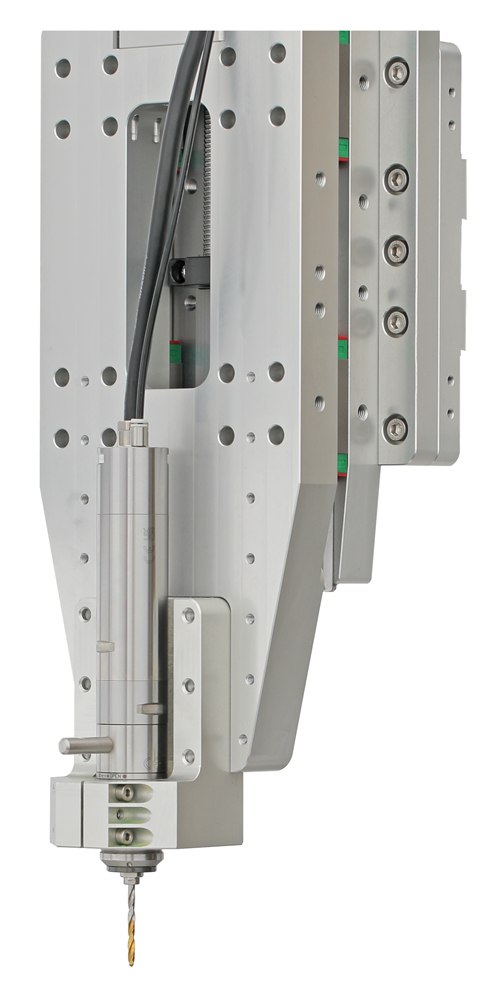
Easy-to-use spindle for milling soft materials. Milling bits are changed using a manual Quick Lever Changer. Not recommended for metal milling. Unlike other spindles, it has a very limited number of collet sizes. This is not so important for standard milling bits. But it will complicate the use of drill bits of different diameters.
Spindle Speed, Max – 60,000 RPM
Power, Max – 350 Watts
Tool Changing – Quick Lever Changer
Spindle Accuracy – Within 1 μm
Torque, Max – 0.05 Nm
Bearings – Ceramic
Motor – Brushless
Collets – 2.0, 3.0, 3.175, 4.0 mm
E3000 3060
Manual Tool Changing
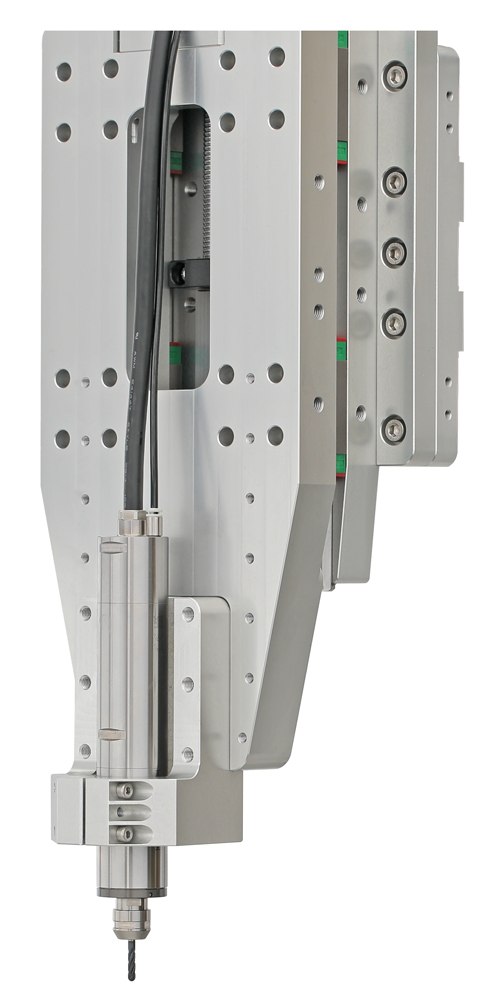
The most popular spindle for metal milling where automatic tool change is not required. The best ratio of price, power and accuracy. It is known for its very high reliability and durability. It can work for a long time in very dirty environments, such as when milling soft stones.
Spindle Speed, Max – 60,000 RPM
Power, Max – 350 Watts
Tool Changing – Wrenches
Spindle Accuracy – Within 1 μm
Torque, Max – 0.05 Nm
Bearings – Ceramic
Motor – Brushless
Collets – from 0.5 to 6.35 mm
E3000 3060 AQC
Auto Tool Changing
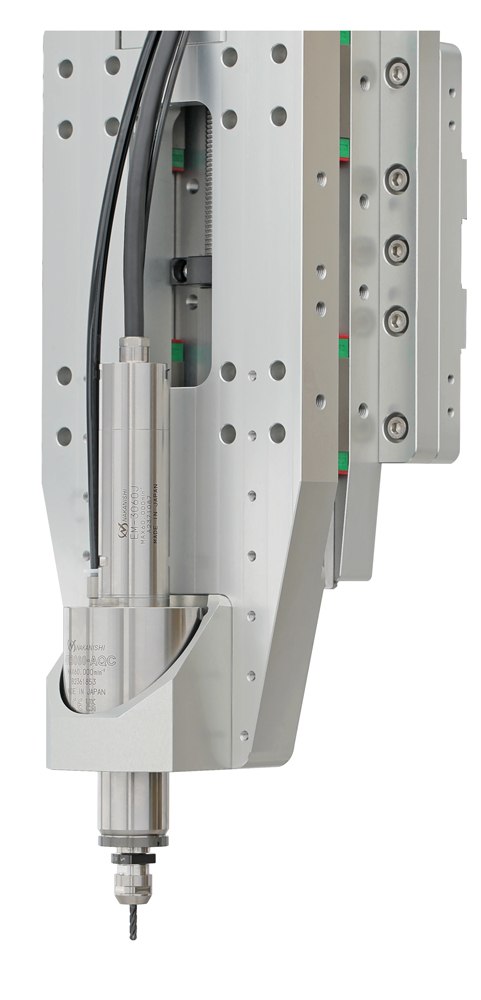
The most popular spindle with ATC (Automatic Tool Changer) or AQC (Air Quick Change). Which is done using a pneumatic clamp inside. Accordingly, air is required for the spindle to operate. Significantly more expensive than spindles without automatic change.
Spindle Speed, Max – 60,000 RPM
Power, Max – 350 Watts
Tool Changing – Air Quick Change
Spindle Accuracy – Within 1 μm
Torque, Max – 0.05 Nm
Bearings – Ceramic
Motor – Brushless
Collets – from 0.5 to 6.35 mm
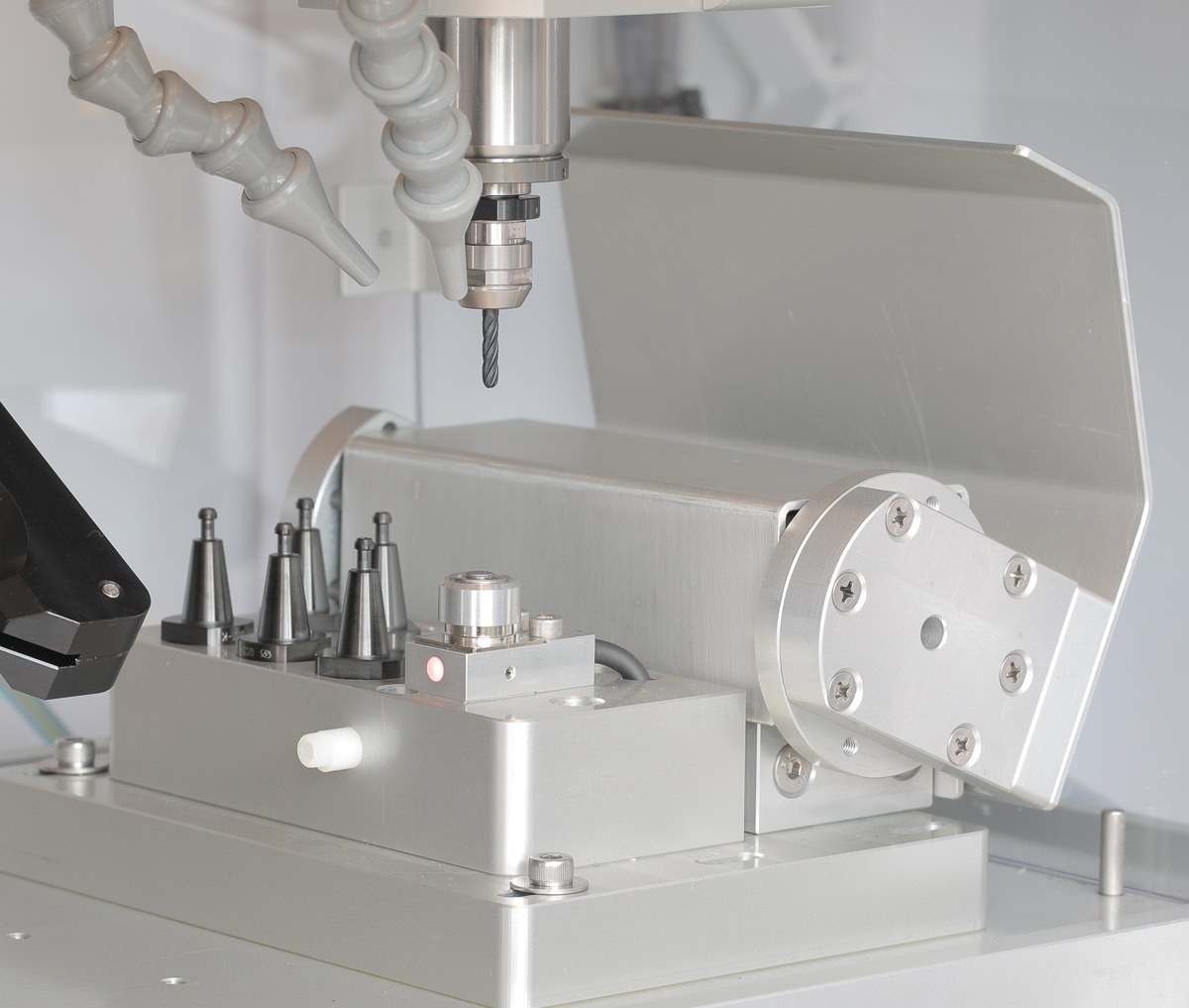
Auto Tool Changer
The machine is equipped with a pneumatic Automatic Tool Change (ATC) system designed for fast, reliable, and highly precise operation. It is based on a Nakanishi Air Quick Change (AQC) spindle that uses miniature conical tool holders, enabling accurate positioning and repeatable tool exchange. During each tool change, the tool length is automatically measured to ensure machining precision and reduce setup time.
A protective cover shields the tool pots area from chips and contaminants, helping maintain clean operation and long-term reliability. Tool clamping and unclamping can be controlled automatically through NC machine code or manually via a dedicated button located on the machine’s front panel or through the screen interface, providing both automation and operator convenience.
Flexible Clamping System
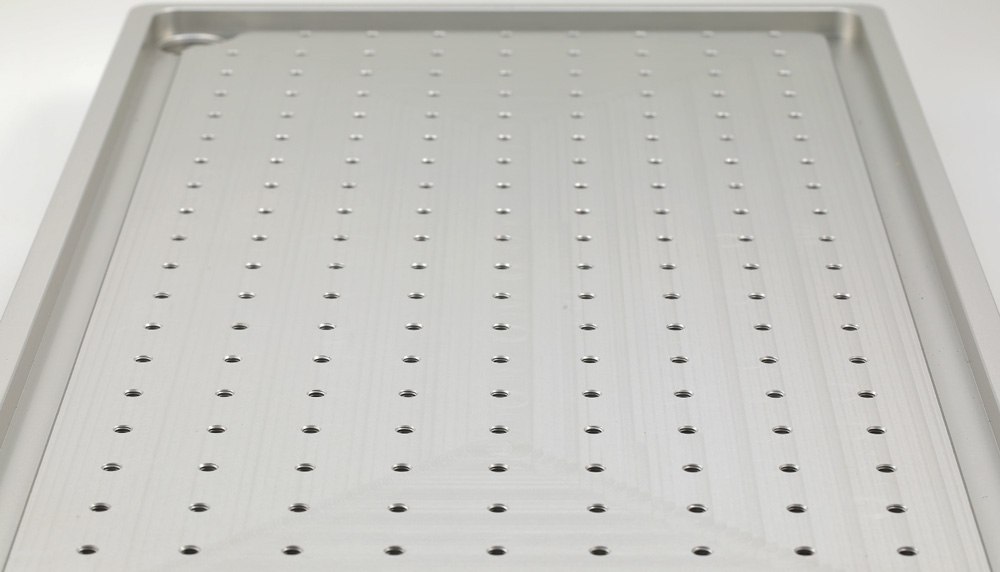
The machine’s main worktable, the X-table, is designed for maximum flexibility and modularity. Threaded mounting holes are arranged across the table surface at 25 mm intervals, allowing users to easily install a wide variety of workholding devices, sub-tables, rotary heads, auxiliary spindles, and other custom accessories as required by specific applications.
To ensure compatibility and ease of integration, all compatible fixtures and accessories manufactured by the Company are designed with matching hole patterns at 25 mm or 50 mm intervals.
For efficient coolant management, the table is equipped with a machined coolant drainage groove around its perimeter, along with two dedicated drain holes that help maintain a clean and controlled working environment during machining operations.
Quick-Release Holder
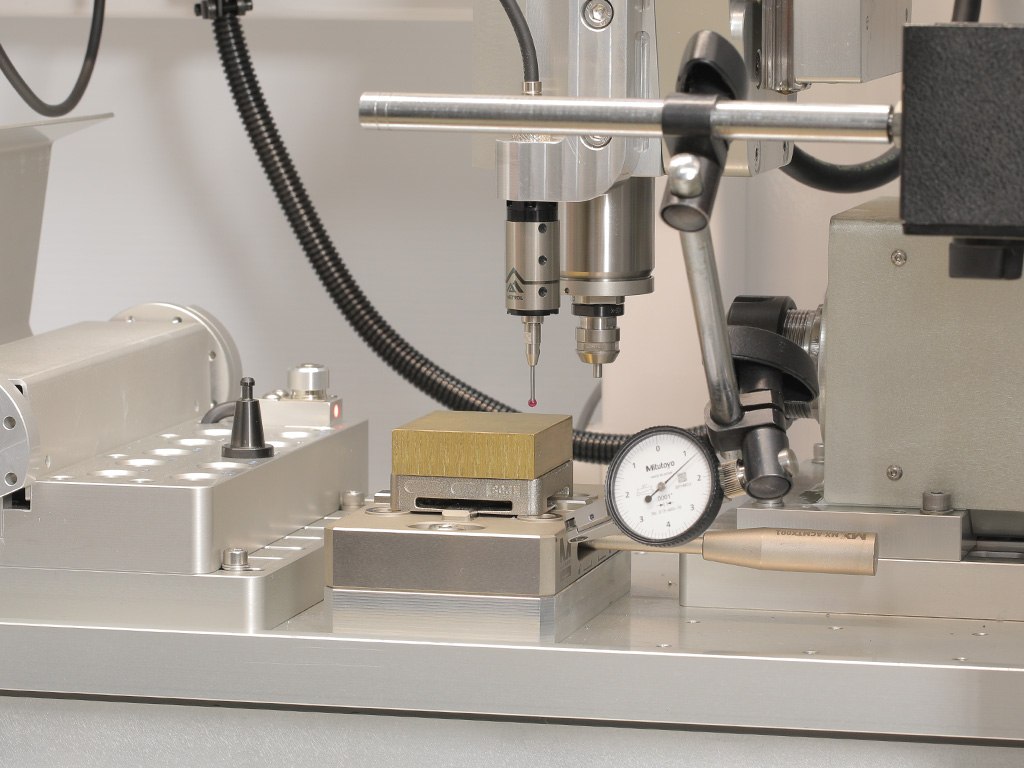
For machine users who require fast and highly repeatable positioning of a workpiece, Quick-Release Holders (QRH) are available. These precision holders provide positioning accuracy and repeatability within 1 micron, making them ideal for applications requiring consistent setup and interchangeability between operations.
The QRH system consists of two main components: a base mounted on the machine and a removable pallet for the workpiece or fixture. Both parts are manufactured with a precision mating seat that ensures accurate, play-free alignment every time the pallet is installed.
The pallet is secured to the base manually using a clamping bolt, providing a simple and reliable locking mechanism. For automated or high-production applications, an optional pneumatic clamping system is also available upon request.
Machine Stand — Mobility and Stability
Enhance your machine setup with a dedicated stand designed to provide both easy mobility and exceptional stability. The stand is equipped with heavy-duty casters and integrated leveling mounts, allowing the machine to be moved effortlessly around the workshop and then securely positioned for operation.
Once the desired location is reached, the leveling mounts can be lowered to lift the stand off the casters. Since the mounts are positioned slightly outside the machine footprint, they provide excellent rigidity and significantly reduce vibration during machining.
The stand also features a lower storage shelf sized to accommodate a coolant tank, along with a convenient pull-out tray for tools, milling cutters, or accessories such as a keyboard and mouse. This practical design helps maintain an organized and efficient workspace while maximizing machine usability.